

Hamlet
Grigori Kozintsev, 1964

Great films you may have missed…
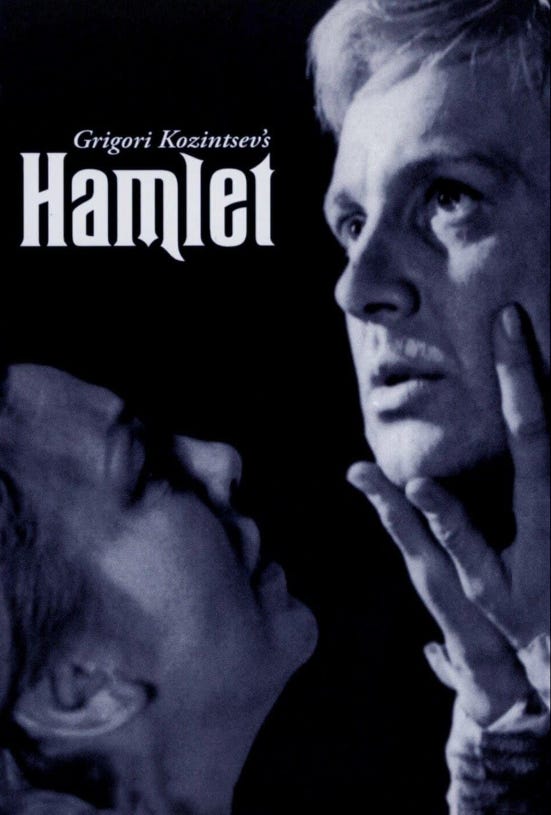
Kozintsev’s Hamlet doesn’t try to be a filmed play, but a work of cinema that happens to use Shakespeare. Wind, stone, iron, surf, corridors that feel like siege tunnels, and a court that resembles an occupied state more than a royal household.
Credit: https://www.imdb.com/title/tt0058126/?ref_=mv_close
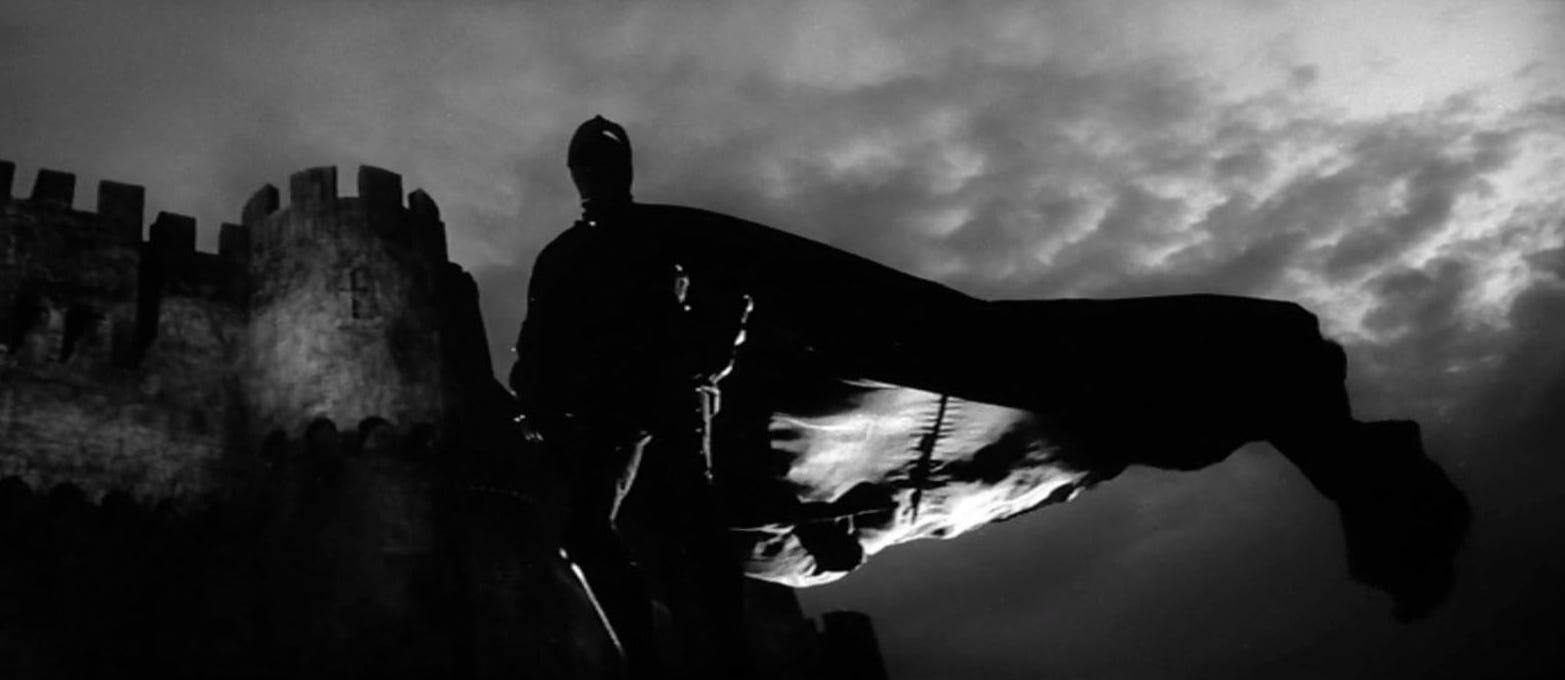
Elsinore isn’t symbolic, it’s actively hostile. Kozintsev drives the tragedy out into weather and open space, then crushes it back into architecture, a rhythm of exposure and confinement that makes power feel bodily rather than abstract. Something impossible to achieve on the stage.
The Russian text matters. Using Boris Pasternak’s superlative translation, Kozintsev strips away rhetorical ornament and pares the play down to its structural spine. The cuts are therefore severe - particularly to anyone at all familiar - but purposeful: What disappears from verse re-emerges in image and sound. This is Shakespeare edited like cinema, not reverently embalmed.
That approach finds its perfect counterpart in Innokenty Smoktunovsky. His Hamlet has often ben described as ‘modern’, but that perhaps misses the point. Smoktunovsky himself rejected the idea of Hamlet as paralysed by indecision. He did not see “To be or not to be” as the emotional summit of the role - a view echoed by how abruptly the soliloquy is handled here.
For him, Hamlet was a man of inner resolve, not doubt: Someone who sees too clearly to act rashly, not someone incapable of action. Having studied Hamlet in some depth before realising they were never going to get to play the Dane, I chime with this interpretation far more than that of a man paralysed by thought.
And it’s this understanding that reshapes the entire film: Smoktunovsky plays Hamlet as a watcher in a watched world - alert, economical, controlled. Even in stillness, you sense calculation, not brooding. His tragedy isn’t hesitation but lucidity: Knowing that every gesture will be absorbed, interpreted, neutralised by the state. In Kozintsev’s Elsinore, reflection isn’t a luxury, it’s a survival tactic.
Kozintsev shoots power as surveillance. The camera roams battlements and passageways the way authority roams bodies. Shot in widescreen Sovscope with stereophonic sound, the format isn’t decorative, it’s ideological. The frame dwarfs individuals, revealing systems rather than personalities. Claudius and Polonius feel less like characters than functions, men whose purpose is maintenance of order.
The locations reinforce this relentlessly. Filmed largely at the Ivangorod Fortress, right on the Soviet border, Elsinore reads as a militarised frontier. It’s a place built to repel and intimidate. This isn’t a family drama in a palace; it’s a crisis inside a stronghold.
Nature becomes Kozintsev’s counter-argument. Sea, stone, fire, iron - elemental forces recur as reminders of a world that predates and outlasts corrupt regimes. The shoreline scenes especially, let landscape carry meaning that text no longer needs to articulate. Against the court’s suffocating interiors, the sea suggests a continuity of life indifferent to intrigue.
Dmitri Dmitri Shostakovich’s score sharpens rather than softens this vision. Pomp curdles into menace; tenderness struggles to survive. Written quickly but with surgical precision, the music doesn’t instruct you how to feel, rather than expose what the images already know.
What finally gives ‘The Russian Hamlet’ its staying power is its refusal to sentimentalise the prince. Smoktunovsky’s own view aligns perfectly with the film’s politics: Hamlet is not a romantic dreamer undone by thought, but a man whose moral clarity isolates him. Insight doesn’t bring escape; it brings responsibility - and, eventually, destruction.
This is Hamlet with neither velvet or candlelight. With salt spray instead of soliloquy. Iron gates instead of introspection. Shakespeare not as Cultural Monument, but as lived experience: A state rotting in real time, and one man understanding - too late - that seeing clearly does not mean surviving intact.
Credit: https://www.imdb.com/title/tt0058126/?ref_=mv_close
Perhaps it takes someone with perspective, a separation from the language, to do such a superlative job with something so dangerously iconic.
Of all the many Hamlets now out there on film, some too reverential, others no more than vanity pieces, this is far and away my favourite.
Anatomy of a Flop 059
