

Festen
Thomas Vinterberg, 1998

Great films you may have missed…
Thomas Vinterberg’s Festen (Celebration) begins as a familiar ritual: A wealthy Danish family gathers at a country hotel to mark the patriarch’s birthday. The early scenes look almost casual, even clumsy - people arriving, luggage carried upstairs, awkward greetings, small talk over drinks. The camera wobbles, reframes, loses people and finds them again.
Nothing appears staged, and that is deliberate.
Within the first dinner the tone shifts, but not through spectacle. Vinterberg’s method is subtler: He lets social behaviour reveal the drama. A speech is made; the room’s reaction matters more than the speech itself. The film’s tension comes from watching people process something they would prefer not to process. Conversation fragments. Jokes become defensive. Hospitality becomes a mechanism for avoidance.
The story is less about events than about how a group decides what reality is allowed to exist in public.
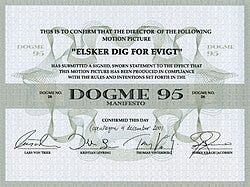
Festen was the first completed film under the Dogme 95 rules - and instead of explaining them separately, the film is the explanation.
Vinterberg and Lars von Trier wrote a manifesto called the ‘Vow of Chastity’, a set of restrictions designed to remove technical manipulation from filmmaking:
No constructed sets.
No artificial lighting.
No added music.
No post-dubbed dialogue.
Handheld camera only.
Real locations.
No visual polish.
This wasn’t an aesthetic preference. It was a disciplinary tool.
The movie was shot inside a functioning country hotel using early consumer digital video cameras. Not cinema cameras - small Sony MiniDV units. The crew often had to move furniture out of frame while shooting because they were not allowed to dress sets. Lighting was whatever existed in the building; in some scenes, hotel table lamps are literally the key light.
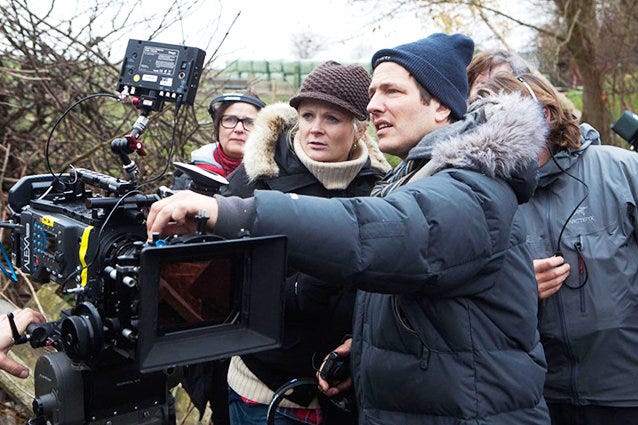
The unstable image is not stylistic improvisation - it is a production necessity. The cameras struggled with exposure, highlights blew out, and operators frequently repositioned mid-scene because there was no coverage plan in the traditional sense. Multiple operators sometimes filmed simultaneously from inside the action, closer to documentary practice than narrative cinema.
The important consequence: Actors could not rely on editing to shape performance. Scenes had to play in real time.
Without score, controlled lighting, or shot composition to guide emotion, behaviour carries the film. Vinterberg encouraged overlapping dialogue and let actors continue scenes even after mistakes. Some of the most effective moments come from people talking over each other, trying to restore normality rather than confront discomfort.
The camera becomes a participant - not neutral, but human. It searches for reactions. It hesitates. It occasionally points at the wrong person. Instead of weakening the film, this creates a peculiar authenticity: The viewer feels present, rather than shown.
The family setting is critical. Families have rules older than morality: Don’t embarrass guests, don’t disrupt ritual, don’t acknowledge what would destabilise the structure. The film observes how social etiquette can overpower truth without anyone consciously choosing it.
Several production choices shaped the final tone:
The hotel was a real operational building; cast and crew lived there during the shoot, blurring rehearsal and filming.
Because post-synchronised sound was forbidden, hidden microphones were placed in the dining room and actors had to project naturally rather than cinematically.
Night interiors were especially difficult - candles and practical fixtures were often the only illumination.
The footage was transferred from video to 35mm film for cinema release, exaggerating the grainy, high-contrast look audiences now associate with the film.
The constraints also solved a budget problem.. Dogme was partly philosophical, partly economic: By forbidding production tools the filmmakers could not afford anyway, the movement turned limitation into identity.
Dogme 95 was never really about realism. The hotel, blocking, and pacing are carefully organised. What the rules removed was control over audience emotion. No music cues, no glamorous framing, no editorial manipulation telling you how to feel.
You are left with behaviour.
And behaviour is harder to dismiss than plot. A conventional drama lets viewers step back and evaluate characters. Festen traps viewers inside social space: Conversations continue, courses are served, and the evening proceeds because stopping would be socially catastrophic.
The film’s achievement is simple but rare - it makes tension from manners.
Many Dogme films followed; few mattered. The rules themselves faded quickly once digital filmmaking became normal. But Festen survives because the restrictions aligned perfectly with the subject. A polished version would likely have softened it. The roughness is not decoration - it is thematic.
The camera looks like evidence.
The dinner feels like a memory no one agreed to share.
That combination still works, and it explains why the film remains studied: Not as a curiosity of 1990s digital video, but as a demonstration that performance, staging, and social dynamics alone can carry a feature film without cinematic ornament.
Aside from all the filmmaker guff, it’s a gut-punch of a movie and well worth the trip.
Anatomy of a Flop 064
